
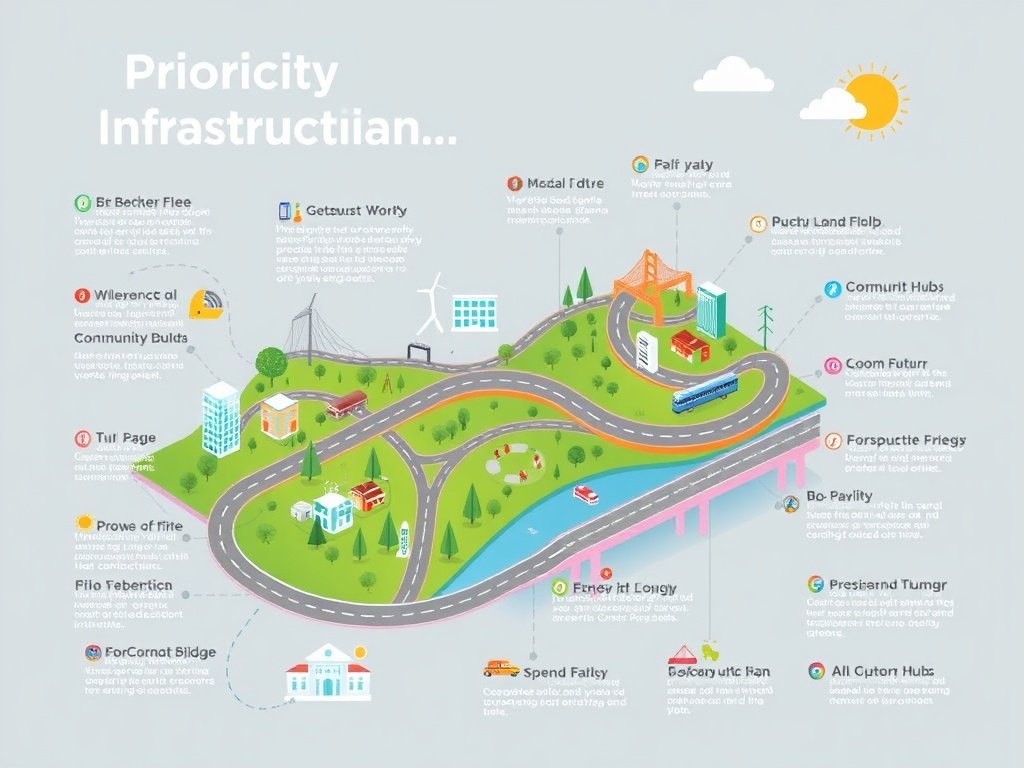
The Priority Infrastructure Plan is a government-led initiative aimed at accelerating infrastructure development across key sectors. It provides a roadmap for sustainable economic growth, creating jobs, attracting investments, and improving efficiency. By focusing on strategic projects, this plan ensures long-term environmental and social benefits, making it a cornerstone for national development and business opportunities.
The Priority Infrastructure Plan outlines a strategic approach to developing critical infrastructure in a way that fosters sustainable growth. Covering sectors like transportation, energy, and urban development, the plan emphasizes efficiency, innovation, and environmental responsibility. With clear implementation strategies, funding models, and performance metrics, it attracts investors and supports local communities. By addressing challenges and leveraging technology, the plan ensures lasting economic impact while promoting employment and social welfare. This comprehensive framework serves as a practical guide for governments, businesses, and stakeholders aiming to contribute to long-term national growth and infrastructure excellence.
Introduction to the Priority Infrastructure Plan
The Priority Infrastructure Plan is designed to modernize national infrastructure and drive sustainable growth. It focuses on strategic sectors such as transportation, energy, and urban development, ensuring efficiency and long-term benefits. The plan aims to create jobs, attract private investments, and improve public services. By integrating environmental and social considerations, it sets a framework for balanced economic progress. Governments and stakeholders can use this roadmap to prioritize projects that yield maximum economic and societal returns, ensuring that infrastructure development supports both immediate needs and future growth.
Key Objectives of the Plan
The main objectives of the plan include accelerating infrastructure development, enhancing economic efficiency, and supporting sustainable growth. It focuses on reducing project delays, improving resource allocation, and boosting employment. By targeting critical sectors, the plan ensures that investments generate maximum impact. Environmental sustainability, technological innovation, and social inclusiveness are also key priorities. Clear guidelines and timelines help implement projects efficiently, while continuous monitoring ensures accountability. Overall, the plan serves as a structured approach to national development, fostering economic resilience and long-term prosperity.
Target Sectors and Strategic Projects
Strategic projects under the plan focus on transportation networks, energy infrastructure, urban development, and digital connectivity. Roads, highways, railways, and ports receive priority funding, improving logistics and trade efficiency. Renewable energy and smart grids are emphasized to support environmental goals. Urban development projects ensure sustainable housing, water supply, and sanitation improvements. Digital infrastructure expansion promotes innovation and business growth. By prioritizing these sectors, the plan maximizes economic returns while meeting social and environmental standards, creating a roadmap for inclusive and sustainable development.
Funding and Investment Opportunities
Funding for the plan comes from government budgets, public-private partnerships, and international financial institutions. Innovative financing models such as infrastructure bonds, equity investments, and grants are used. Investors gain opportunities in high-priority projects with stable returns. Transparent allocation and risk assessment attract confidence from both domestic and global stakeholders. This approach ensures projects are well-funded and completed on time. By combining multiple funding sources, the plan guarantees economic feasibility while promoting private sector participation, making infrastructure development both sustainable and profitable.
Implementation Strategy and Roadmap
The plan follows a structured implementation strategy with clear timelines and milestones. It uses phased project execution to ensure resource optimization and risk reduction. Dedicated monitoring and evaluation units track progress and provide feedback for timely adjustments. Stakeholder engagement, including local authorities and private investors, is emphasized. Technology integration and project management systems improve efficiency and reduce delays. This structured approach ensures that each phase contributes effectively to overall national growth objectives, making the plan practical, transparent, and results-driven.
Challenges and Risk Management
Implementing large-scale infrastructure projects faces challenges such as funding gaps, regulatory delays, and technical constraints. Environmental concerns and social impact issues also require attention. The plan incorporates risk assessment frameworks and mitigation strategies to address these obstacles. Contingency planning, stakeholder consultations, and policy adjustments help overcome barriers. By anticipating risks and preparing solutions, the plan maintains project continuity, protects investments, and ensures timely delivery. Effective risk management strengthens confidence among investors and communities, making infrastructure development resilient and sustainable.
Economic Benefits and Job Creation
The plan stimulates economic growth by creating direct and indirect employment opportunities. Construction, logistics, energy, and technology sectors benefit from increased demand. Improved infrastructure enhances trade efficiency, reduces costs, and attracts investment. Long-term economic gains include increased productivity, higher GDP, and enhanced competitiveness. Local communities benefit from better services and improved living standards. By prioritizing projects with high economic returns, the plan ensures sustainable development that balances immediate employment generation with long-term national prosperity.
Also read this: SEO Instant Appear HighSoftware99.com Ultimate Guide for Fast Rankings
Technological Integration in Infrastructure
Technology plays a key role in the plan, from smart transportation systems to renewable energy solutions. IoT, AI, and data analytics optimize project management, resource allocation, and maintenance. Digital monitoring ensures accountability and transparency. Technology adoption reduces costs, improves safety, and enhances efficiency. By leveraging innovation, the plan achieves sustainable growth while promoting modern, future-ready infrastructure. Stakeholders gain a competitive advantage, and national development becomes faster, smarter, and environmentally responsible.
Environmental Sustainability Measures
Sustainability is a core principle of the plan. Projects comply with environmental standards, use renewable resources, and incorporate energy-efficient technologies. Green building practices and waste reduction methods are promoted. Environmental impact assessments guide project selection and design. By prioritizing sustainability, the plan minimizes ecological damage, promotes clean energy, and ensures resources are preserved for future generations. This approach balances economic growth with environmental responsibility, creating infrastructure that supports long-term prosperity without compromising the planet.
Social Impact and Community Development
The plan enhances social welfare through infrastructure that improves living conditions. Access to clean water, sanitation, healthcare facilities, and transportation is prioritized. Projects also promote education, skill development, and local employment. Stakeholder engagement ensures communities benefit directly from development. By integrating social considerations, the plan ensures inclusive growth, reduces inequalities, and strengthens the connection between infrastructure and societal well-being.
Policy Support and Governance
Government policies underpin the plan’s success, offering regulatory clarity, incentives, and institutional support. Efficient governance ensures timely approvals, monitoring, and accountability. Policy frameworks encourage private investment while protecting public interest. Coordination between federal, state, and local authorities reduces bottlenecks. Strong governance ensures that projects are executed efficiently, with transparency and fairness, reinforcing investor confidence and public trust in national infrastructure development.
Monitoring, Evaluation, and Performance Metrics
The plan uses performance metrics to track project progress, cost efficiency, and social impact. Monitoring systems ensure timely interventions and accountability. Data-driven evaluations identify areas for improvement. By measuring outcomes, the plan maintains high standards, improves transparency, and ensures that objectives are met. Continuous evaluation allows for adaptive management, making infrastructure development more effective and results-oriented.
Case Studies of Successful Projects
Several priority projects have demonstrated the plan’s effectiveness. Modern highways, renewable energy plants, and urban development initiatives serve as benchmarks. These examples show improved efficiency, economic returns, and social benefits. Lessons learned from these projects inform future planning, ensuring best practices are replicated. Highlighting success stories builds investor confidence and public support, illustrating the real-world impact of structured infrastructure development.
H2: 14. Future Outlook and Expansion
The plan envisions expansion into emerging sectors such as digital infrastructure, smart cities, and green energy. Long-term strategies include scaling successful models and incorporating innovative financing. Future initiatives aim to enhance connectivity, efficiency, and sustainability nationwide. By planning ahead, the roadmap ensures infrastructure growth continues to meet evolving economic, technological, and environmental demands, securing national prosperity.
Conclusion and Key Takeaways
The Priority Infrastructure Plan offers a comprehensive roadmap for sustainable growth, balancing economic, social, and environmental objectives. Strategic project selection, innovative financing, and technology integration ensure efficient execution. Strong governance and monitoring guarantee accountability, while community-focused initiatives promote inclusive development. The plan attracts investors, generates employment, and strengthens national infrastructure, creating long-term benefits. By following this roadmap, governments and stakeholders can achieve sustainable prosperity while fostering innovation, resilience, and societal well-being.
FAQs
- What is the Priority Infrastructure Plan?
It is a government initiative to accelerate strategic infrastructure projects for sustainable economic and social growth. - Which sectors are prioritized?
Transportation, energy, urban development, and digital infrastructure are key focus areas. - How does it create jobs?
Through construction, technology, and support services, the plan generates direct and indirect employment. - What funding models are used?
Government budgets, public-private partnerships, and infrastructure bonds are commonly utilized. - How is sustainability ensured?
Projects follow environmental guidelines, use renewable resources, and promote energy efficiency. - Who monitors the plan?
Dedicated units track progress, performance metrics, and compliance with policies. - How can businesses benefit?
Investors gain opportunities in priority projects with stable returns and long-term growth potential.
For more info: primehouz.com
