
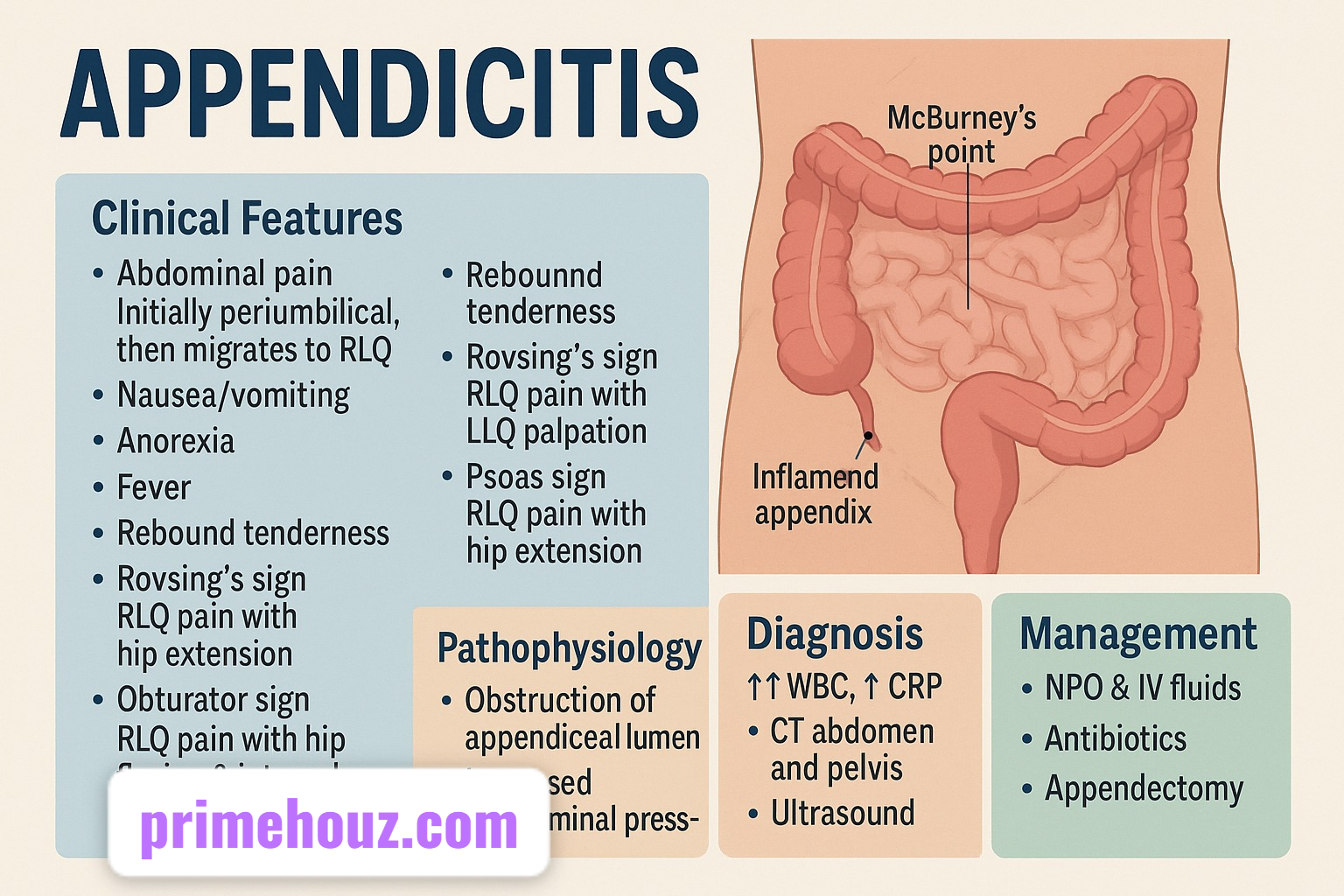
Appendicitis develops in four stages: Early (Catarrhal), Suppurative (Phlegmonous), Gangrenous, and Perforated. Early symptoms such as mild abdominal pain, nausea, or loss of appetite are subtle but critical to recognize. Immediate medical evaluation prevents serious complications like rupture, infection, and sepsis. Timely treatment reduces surgical risks, shortens recovery, and saves lives.
Appendicitis is an inflammation of the appendix, a small pouch connected to the large intestine. Understanding its four stages—Early, Suppurative, Gangrenous, and Perforated—is essential because each stage has distinct symptoms and risks. Early detection prevents serious complications such as rupture, peritonitis, and sepsis. This guide explains appendicitis in simple terms for teens and adults, providing practical tips and insights to identify symptoms early, seek medical care promptly, and ensure safer, faster recovery.
Understanding Appendicitis
Appendicitis occurs when the appendix becomes inflamed due to blockage or infection, and it is a common cause of emergency abdominal surgery. Early symptoms are often subtle, including mild abdominal discomfort, nausea, loss of appetite, or fatigue. Left untreated, appendicitis can progress quickly through four stages, each with increasing severity and risk. Recognizing these stages and their hidden signs helps patients seek prompt medical care, reduce complications, and improve recovery outcomes. Awareness and early intervention are key to preventing life-threatening events.
Stage 1 – Early (Catarrhal) Appendicitis
Stage 1 appendicitis involves mild inflammation that is often easy to miss. Pain usually starts around the belly button and gradually moves to the lower right abdomen, accompanied by nausea, low-grade fever, or mild fatigue. Symptoms can be intermittent and may feel like indigestion or stomach upset. Detecting appendicitis at this stage is crucial because early intervention—observation, medication, or early surgery—can prevent progression to more serious stages. Awareness of these subtle signs can save lives.
Stage 2 – Suppurative (Phlegmonous) Appendicitis
In Stage 2, the appendix becomes more inflamed and begins producing pus. Abdominal pain intensifies, localizes to the lower right side, and is often accompanied by vomiting, nausea, and fever. Blood tests show elevated white blood cell counts, indicating infection, while imaging such as ultrasound or CT scans confirms the diagnosis. Prompt surgical intervention is typically required to prevent progression to gangrenous or perforated appendicitis. Early treatment at this stage reduces the risk of severe complications.
Stage 3 – Gangrenous Appendicitis
Gangrenous appendicitis occurs when the appendix tissue starts dying due to lack of blood supply. Patients experience severe, sharp abdominal pain, persistent vomiting, high fever, fatigue, and general weakness. This stage dramatically increases the risk of rupture, which can lead to peritonitis, sepsis, or organ failure if untreated. Emergency surgery is almost always necessary. Recognizing intense pain and systemic symptoms early can save lives and prevent the condition from worsening.
Stage 4 – Perforated (Ruptured) Appendicitis
Stage 4 is the most critical phase, occurring when the appendix bursts and infectious material spreads in the abdominal cavity. Symptoms include extreme abdominal pain, swelling, high fever, and sometimes signs of shock. Immediate surgery and intravenous antibiotics are essential, as untreated rupture can be fatal. Early recognition of warning signs before rupture is crucial to reduce mortality. Timely intervention improves survival rates and ensures a safer, faster recovery.
Also read this :Gastroshiza in Kids: 10 Proven Causes, Symptoms & Expert Care Guide for Parents
Complications and Risks
Appendicitis can lead to serious complications if not treated promptly, including abscess formation, peritonitis, sepsis, and multi-organ failure. Delayed treatment increases the risk of perforation by more than 50 percent. Early surgical removal of the appendix reduces hospital stays, prevents long-term complications, and speeds up recovery. Patients and caregivers should watch for warning signs such as worsening abdominal pain, persistent vomiting, fever, and swelling. Proper awareness and timely medical care are essential for better outcomes.
Recognizing Red Flags
Key red flags include severe or worsening abdominal pain, persistent vomiting, high fever, swelling in the lower right abdomen, rapid heartbeat, or confusion. Even mild or intermittent symptoms should not be ignored, as appendicitis can escalate quickly. Prompt medical evaluation ensures diagnosis and treatment before serious complications develop. Early recognition of warning signs is vital for preventing life-threatening situations, especially in teens and young adults who may initially underestimate their symptoms.
Other Types of Appendicitis
Aside from the main stages, appendicitis can also present as acute, uncomplicated, complicated, or chronic. Acute appendicitis appears suddenly and often requires immediate surgery, while uncomplicated cases involve milder inflammation. Complicated appendicitis includes gangrene or perforation, increasing risks significantly. Chronic appendicitis is rare and causes recurring mild abdominal discomfort over weeks or months. Understanding the type and severity helps doctors tailor treatment and improve patient outcomes.
How Doctors Diagnose Appendicitis
Diagnosis involves physical examination, lab tests, and imaging. Tenderness at McBurney’s point, elevated white blood cells, and scans like ultrasound or CT confirm the condition. Early diagnosis prevents progression to gangrene or rupture. Quick recognition allows prompt surgery, reduces hospital stays, and minimizes complications. Awareness of diagnostic procedures helps patients understand when to seek care and ensures timely treatment.
Recovery and Treatment
Treatment usually involves surgical removal of the appendix, called appendectomy, either laparoscopically or through open surgery. Recovery typically takes two to six weeks depending on surgery type and complications. Antibiotics may be given to prevent infection. Early detection of appendicitis results in quicker recovery, fewer complications, and shorter hospital stays. Post-surgery care, including rest and gradual activity resumption, is critical to ensure complete healing and long-term health.
Preventing Complications
While appendicitis cannot always be prevented, recognizing symptoms early and seeking treatment promptly reduces risks. Monitoring abdominal pain, nausea, fever, and other subtle signs is essential. Patients should not attempt home remedies or delay medical evaluation. Following doctor’s advice, completing antibiotics, and adhering to post-operative care ensures safe recovery and reduces the risk of severe complications like rupture, infection, or sepsis. Early intervention remains the most effective strategy.
Conclusion – Don’t Wait, Act Fast
Appendicitis can progress rapidly from mild discomfort to life-threatening rupture. Understanding the four stages and recognizing hidden symptoms are essential to prevent severe complications. Abdominal pain, nausea, or fever should never be ignored. Immediate medical evaluation and treatment save lives and improve recovery outcomes. Stay alert, act promptly, and educate others to recognize the warning signs of appendicitis to protect health. Early intervention is the key to safety.
Call-to-Action: If you suspect appendicitis, visit a doctor or emergency room immediately. Quick action can save your life.
FAQs – Appendicitis
1. What is the first sign of appendicitis in teens?
Mild pain near the belly button and slight loss of appetite are often the earliest signs.
2. Can appendicitis go away on its own?
No, untreated appendicitis usually worsens and can lead to rupture.
3. How fast can appendicitis progress?
It can advance from early inflammation to rupture within 24–72 hours.
4. Is fever always present with appendicitis?
Fever may appear in later stages but is often mild or absent in the first stage.
5. Can diet or home remedies prevent appendicitis?
No, only timely medical treatment can prevent complications.
6. What age group is most at risk?
Appendicitis commonly affects people between 10 and 30 years of age.
7. How long is recovery after appendectomy?
Recovery usually takes 2–6 weeks, depending on surgery type and complications.
For more info :primehouz.com
